Minolta MC W.Rokkor-SG 28mm f/3.5: The Practical Wide Angle Between Two Eras
The Minolta MC W.Rokkor-SG 28mm f/3.5 is not a prestige lens. Its strength is quieter: a useful 28mm view, durable early-1970s construction, and a rendering style that works across winter landscapes, city streets, and black-and-white studies.
The Minolta MC W.Rokkor-SG 28mm f/3.5 is not a prestige lens. Its strength is quieter: a useful 28mm view, durable early-1970s construction, and a rendering style that works across winter landscapes, city streets, and black-and-white studies.
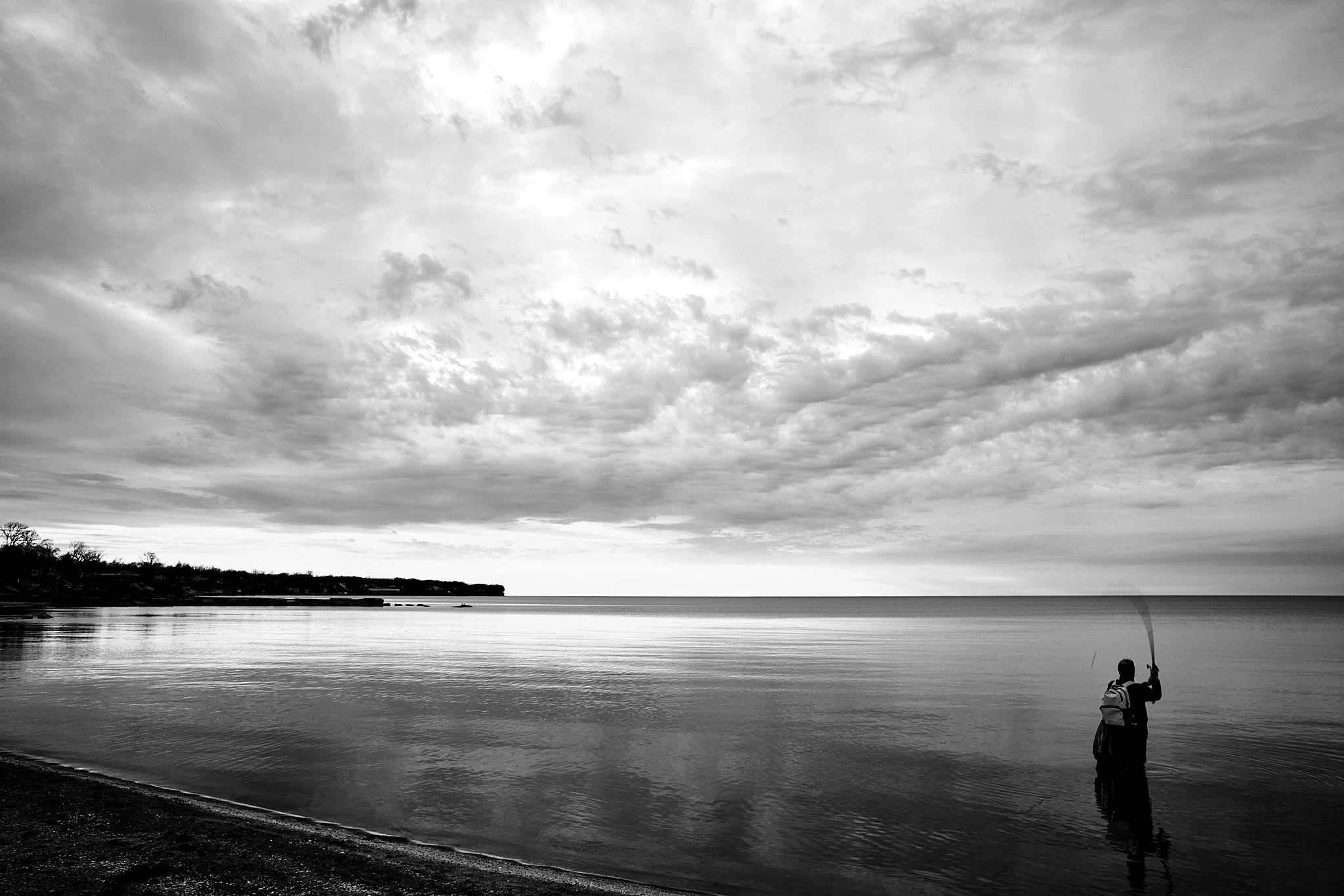
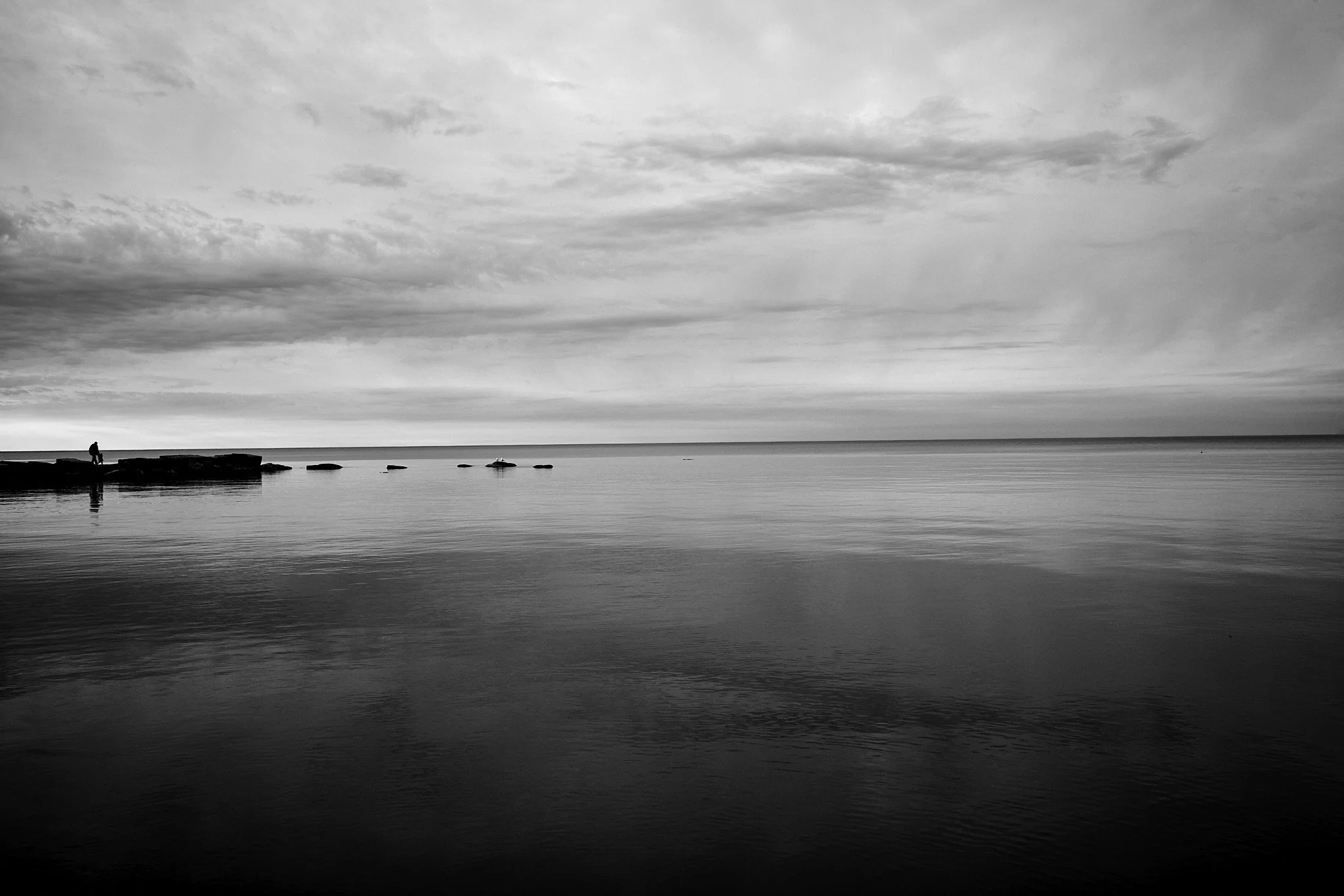
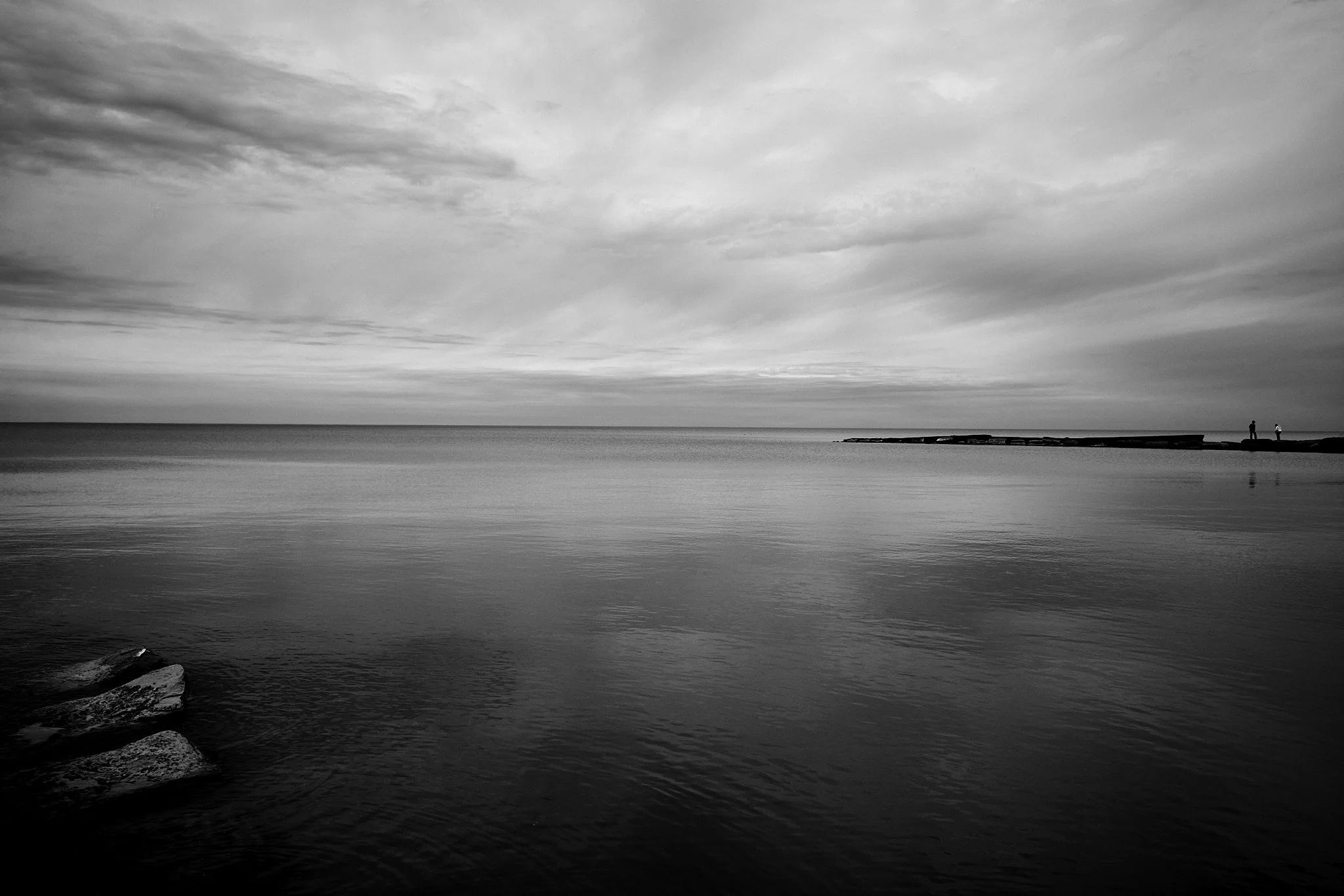
Fisherman on Lake Erie at dusk.
The Minolta MC W.Rokkor-SG 28mm f/3.5 is easy to overlook. Its f/3.5 maximum aperture seems modest, especially in a catalog where faster lenses naturally draw more attention. But 28mm was one of the most useful wide-angle focal lengths of the manual-focus era: broad enough to show the environment, but not so wide that every photograph depends on exaggerated perspective.
This lens was built for that middle ground.
What stands out is not an exaggerated “vintage look” or lack of “digital sharpness,” but how naturally the lens handles space. Foreground objects can carry real weight while the distance remains connected to them. In black and white, the midtones retain separation. In color, the subdued winter blues, whites, and earth tones remain distinct without becoming harsh.
Wide, but still controlled
At 28mm, position matters more than magnification. Moving a few feet forward can transform a rock, curb, tree, or patch of ice from a minor detail into the structure of the photograph. The focal length rewards getting close enough for the foreground to establish scale, then allowing the background to explain where that detail exists.
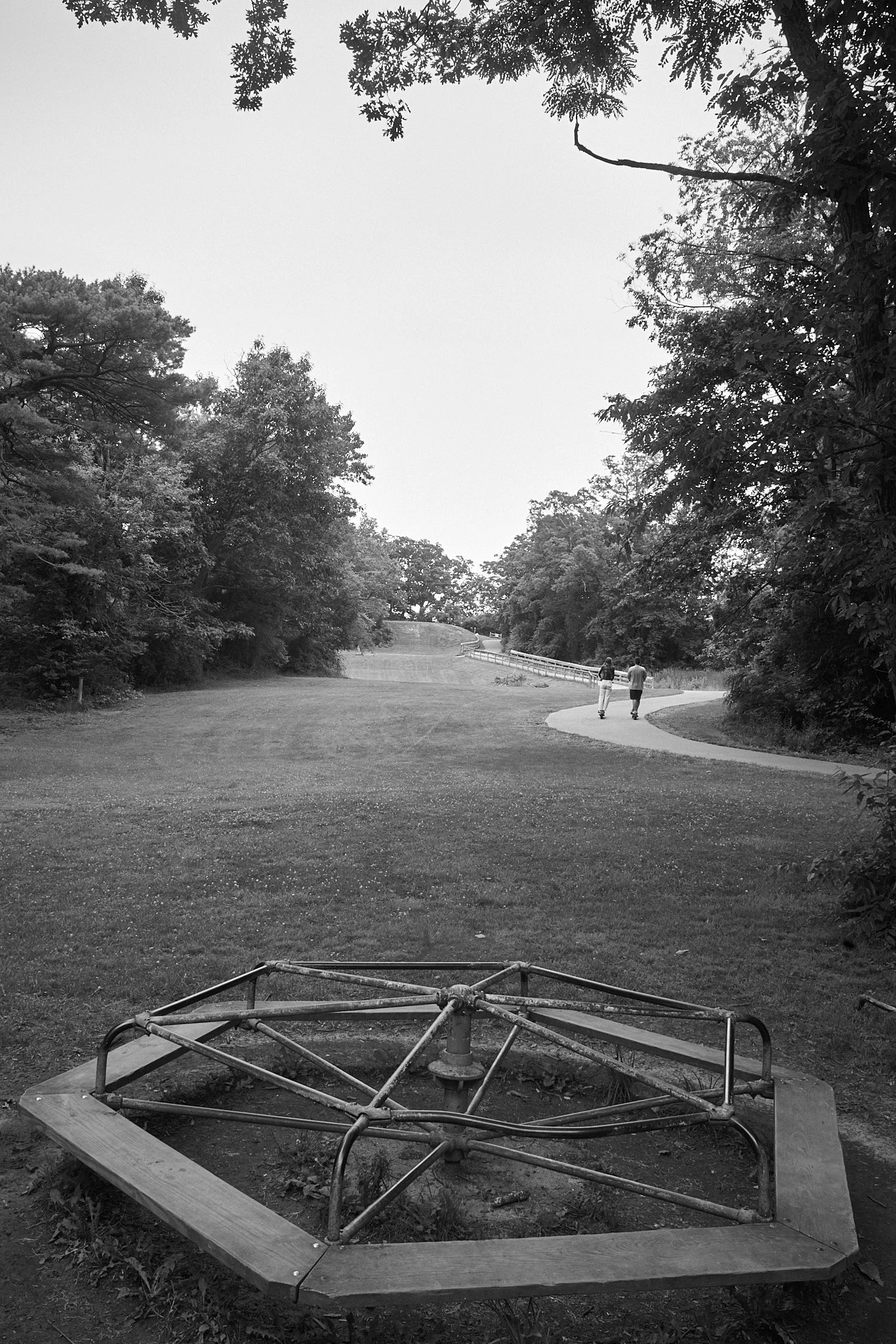
Just a reminder, a slice of childhood memory to hold to and remember.
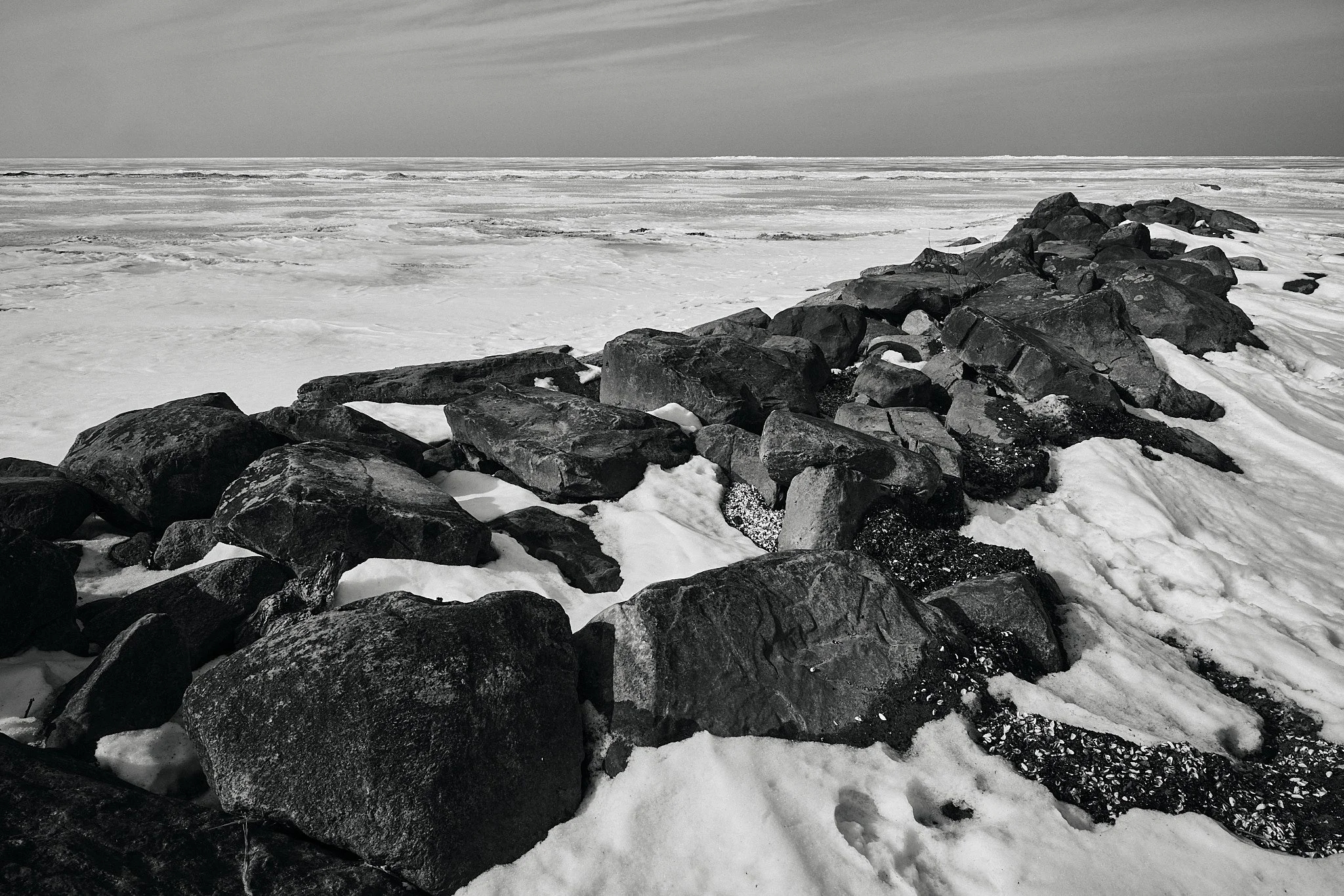
In the photograph above, the rocks form a path through the frame toward the frozen lake. The perspective is clearly wide, but the horizon does not feel pushed into irrelevance. The near and far parts of the scene remain connected. That balance is one of the reasons a practical 28mm lens can be more useful than a more dramatic ultra-wide.
The lens focuses to approximately 0.6 meter and uses a 55mm filter thread. Neither specification is unusual, but both fit its role within the Minolta SR system: compact enough to carry, familiar to operate, and suited to landscapes, architecture, street photography, and general travel.
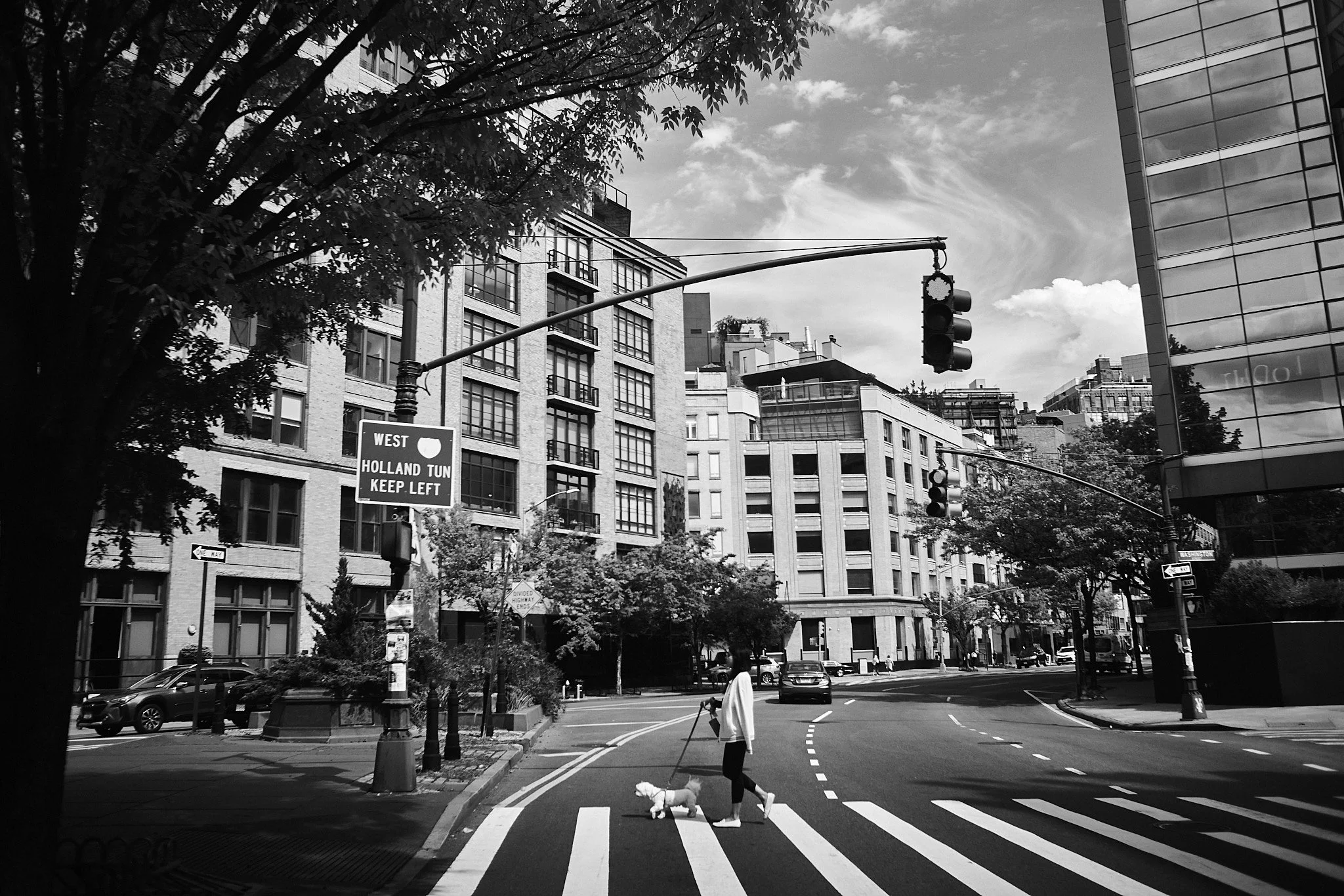
NYC, May 2026
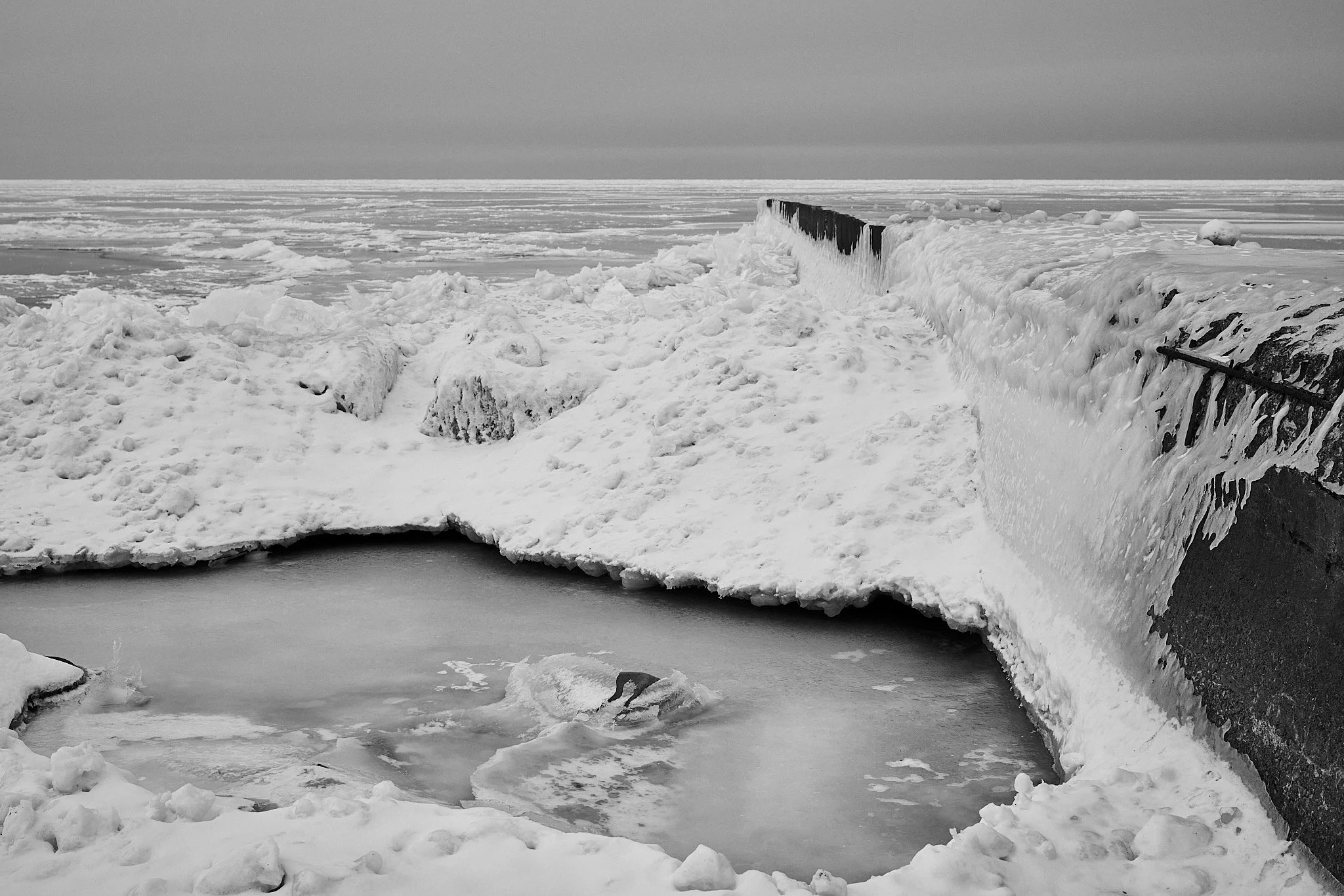
A frozen winter landscape shows another strength of the focal length. The frame can hold a large amount of texture without losing the overall shape of the ravine. Small differences in blue, green, grey, and off-white remain visible across the ice, while the dark banks keep the composition contained.
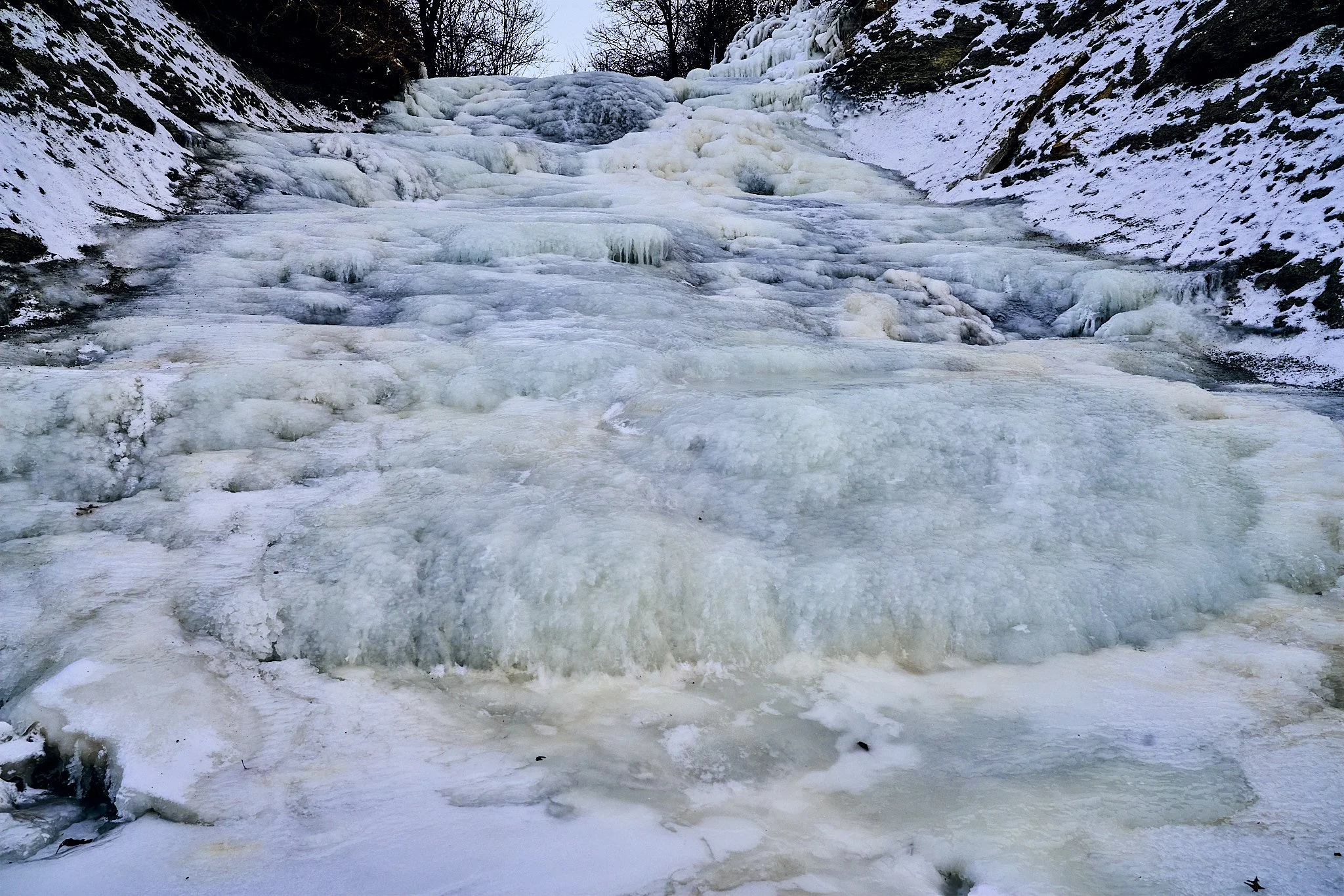
Rocky River, Ohio, 2026
A lens carried across Minolta’s design transition
The SG marking on the front ring was not simply a decorative model suffix. Minolta used a two-letter code to identify optical construction, and SG indicates seven elements arranged in seven groups.
Specialist Minolta chronologies place the MC II version of this lens around 1970. That version used a short, knurled metal focusing grip and a silver aperture ring. Around 1973, Minolta carried the same basic seven-element, seven-group specification into the newer MC-X body, adding a rubber focusing grip and black aperture ring. North American examples could carry the Rokkor-X name, while other markets generally retained Rokkor.
This is why two lenses with the same focal length and aperture may look noticeably different while still belonging to the same optical generation. Rokkor-X was primarily a regional branding distinction, not proof of a different optical formula.
Around 1975, Minolta introduced a smaller five-element, five-group 28mm f/3.5 that focused more closely. That later lens belongs to the same focal-length family, but it should not be cataloged as the same design simply because the basic name remained familiar.
Why it still matters
The Minolta MC W.Rokkor-SG 28mm f/3.5 was not Minolta’s fastest or most prestigious wide-angle lens. It was the practical option—moderate in speed, durable in construction, and broad enough for everyday use. Its history also captures an important transition in Minolta design, from the metal-grip MC II style to the rubber-grip MC-X generation before the optical formula changed in the middle of the decade.
Today, it remains appealing for the same reason. It does not ask every scene to become a spectacle. It encourages the photographer to move, organize the foreground, and pay attention to the relationship between an object and the space around it.The lens records the scene without turning it into a demonstration of wide-angle distortion.
For more technical information and vintage-lens research, visit Brass & Glass: https://brass.glass/gear/minolta-mc-rokkor-28mm-f35